How Much EMI Is Actually Safe for Your Salary?
Banks may approve a car EMI that is far higher than what is actually safe. Learn how to calculate your real EMI limit, understand FOIR, and avoid common car loan mistakes before buying a car.
Tag
You are reading articles tagged #EMI. These are handpicked guides written for Indian readers — no jargon, no filler, just the information you actually need to make better financial decisions.
Banks may approve a car EMI that is far higher than what is actually safe. Learn how to calculate your real EMI limit, understand FOIR, and avoid common car loan mistakes before buying a car.
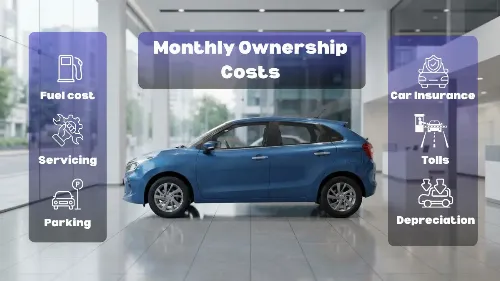
Most car buyers budget only for the EMI. Discover the hidden monthly costs of owning a car in India, including fuel, insurance, servicing, parking, tolls, and depreciation that can add over ₹8 lakh in 4 years.
Most first-time car buyers do not make one big mistake. They make several small ones that quietly add lakhs to the cost of ownership. This guide covers the 8 most expensive car buying mistakes in India and what to do instead.
Understand the difference between loan prepayment, part payment and foreclosure in simple terms. Learn how each affects your home loan with a practical example.
A low car EMI does not always mean a cheap loan. See how tenure, interest rates, and extra fees can increase the total cost of your car loan.
Planning to buy a Royal Enfield on a ₹20,000 monthly salary? This 2026 guide explains realistic EMI calculations, the best budget models, fuel costs, and total ownership expenses in India so you can make a confident decision.
Struggling to manage a ₹25,000 monthly income? Here is a realistic month by month budget split, with real numbers for rent, EMI, food, and savings.
Tags on Fintool Baba are added by hand, not generated automatically. That means when you see #EMI on an article, it's there because the piece genuinely deals with that topic — not because a script matched a keyword. The result is a tighter, more useful reading list than you'd find on most aggregator-style finance sites.
Every article here is written with an Indian context in mind from the first sentence. Figures are in rupees. Examples use Indian banks, Indian cities, and Indian financial products. Tax references follow the Income Tax Act as it currently stands. If something changes — a new budget, a revised interest rate, a rule update from SEBI or RBI — we go back and revise the affected articles rather than leaving outdated information sitting on the page.
If this is your first time on a #EMI page, the article at the top is a good place to start. It's placed there because readers consistently find it the most useful entry point — whether they're completely new to the topic or just looking for a reliable second opinion before making a decision.