Home Loan Prepayment vs Investing: ₹40 Lakh Loan Guide
Have a ₹40 lakh home loan and extra money? Compare prepayment and investing with simple numbers, tax points and practical checks.
Practical money guides, investment strategies, tax tips, and budgeting advice — written and verified for Indian households and working professionals.
Have a ₹40 lakh home loan and extra money? Compare prepayment and investing with simple numbers, tax points and practical checks.
Saving for a goal one year away? Compare RD vs FD based on monthly saving, lump-sum investment, interest, tax and withdrawal terms.
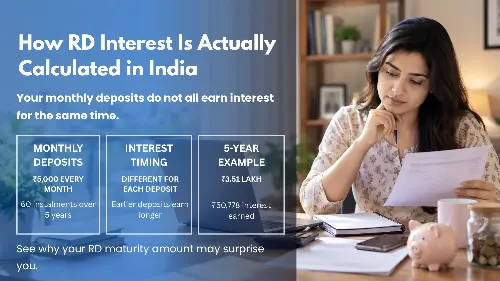
How is RD interest calculated in India? Learn how monthly instalments earn interest for different periods and why your RD maturity amount may surprise you.
Saving ₹5,000 a month? Compare RD vs SIP over five years and see the difference between predictable returns and market-linked growth.
A 7% salary raise sounds good, but how much do you really gain after inflation? See India's latest data, salary figures and real-growth examples.
A 7% FD sounds solid, until tax and inflation take their share. See the real, post-tax, post-inflation return across three income slabs.
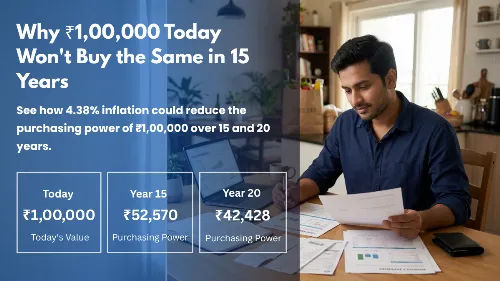
₹1 lakh today buys a lot less 15 years from now. See the real math behind inflation impact on savings in India, free and anonymous.
See how a ₹5,000 monthly SIP for 20 years at 12% grows to ₹49.96 lakh but is worth only about ₹23.11 lakh in today's money after inflation.
Compare a flat SIP and a 10% Step-Up SIP over 20 years. See total investment, year-by-year growth, and whether increasing your SIP really pays off.
See what a flat ₹5,000 monthly SIP actually becomes over 20 years and why most investors quit years before the compounding curve bends upward.
Banks may approve a car EMI that is far higher than what is actually safe. Learn how to calculate your real EMI limit, understand FOIR, and avoid common car loan mistakes before buying a car.
Most car buyers budget only for the EMI. Discover the hidden monthly costs of owning a car in India, including fuel, insurance, servicing, parking, tolls, and depreciation that can add over ₹8 lakh in 4 years.
Every article on the Fintool Baba blog is written with one goal in mind — giving you the financial clarity to make better decisions with your money. Whether you earn ₹18,000 a month or ₹1.8 lakh, whether you are just starting your first job or planning for retirement, you will find practical and actionable guidance here that applies to your real situation.
Unlike generic personal finance content that talks about stock portfolios in US dollars, every guide here is rooted in India's financial landscape. We cover tax slabs from the Indian Income Tax Department, EMI calculations using RBI-benchmarked rates, investment options available through SEBI-regulated platforms, and budgeting advice calibrated to Indian cost-of-living realities in cities like Mumbai, Delhi, Bengaluru, Hyderabad, and beyond.
Use the category filters above to jump to the topic most relevant to you. If you are trying to save more from your salary, start with our budgeting guides. If you are comparing a home loan, the loan and EMI articles will walk you through the numbers. And if you are not sure where to begin, our most-read articles each month are always pinned at the top of the page.
From the 50-30-20 rule to zero-based budgeting, learn how to make your monthly salary work harder with practical saving strategies tailored to Indian income levels.
Understand how home loans, car loans, and personal loans really work — including hidden charges, prepayment benefits, and how to reduce your total interest outgo.
Step-by-step guides on SIPs, mutual funds, FDs, PPF, NPS, and other investment vehicles available to Indian investors through regulated platforms.
Practical breakdowns of old vs new tax regime, Section 80C deductions, HRA exemption, and how to legally reduce your income tax liability every year.