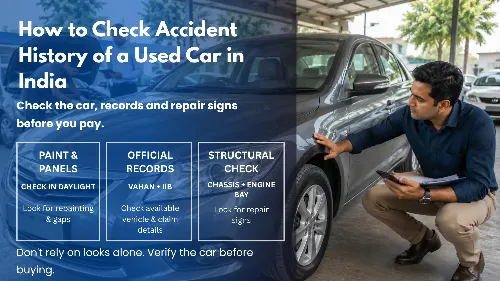
Learn how to check a used car's accident history in India using VAHAN, IIB claim records, and a simple physical inspection walkthrough.
Buying a used car is exciting, especially when you find a model you like at a good price. But before discussing the final price, there is one important question: has this car been in an accident before?
A car can look almost new after washing, polishing and repainting. Some repairs are easy to spot, while others may only become clear when you check the panels, engine bay or structural areas carefully.
You do not need to be a mechanic to perform a basic accident check. A careful walk-around, official record checks and a professional inspection when needed can help you make a safer buying decision.
Why Should You Check a Used Car for Accident Damage?
An accident does not automatically make a used car a bad purchase. A small dent, scratch or bumper repair may have been fixed properly.
The bigger concern is serious damage that has not been properly disclosed. Structural repairs or poor-quality bodywork can create problems later and may affect the car's resale value.
That is why it is better to check the car before paying the seller.
Accident history is only one part of buying a used car. For other purchase-related expenses, see our hidden costs of buying a used car guide. For a broader list of mistakes to avoid, see our used car buyer mistakes guide.
How to Check a Used Car for Accident Signs
1. Check the Paint in Natural Daylight
Start by checking the car outside in proper daylight. Showroom and parking lights can hide differences in paint colour and shine.
Compare neighbouring panels such as the bonnet, fenders, doors, boot and quarter panels. If one panel looks darker, lighter or glossier than the others, it may have been repainted.
Run your hand gently over the paint and look at the texture. A repaired panel may have a different finish, sometimes showing a fine uneven texture known as orange peel.
Also check around rubber seals, window trims and panel edges. Paint marks in areas that should normally remain unpainted can indicate repainting.
2. Compare the Panel Gaps
Check the gaps around the bonnet, doors, boot and fenders. They should generally look even and consistent. Compare both sides of the vehicle.
A noticeably wider or narrower gap can mean that a panel was removed, replaced or realigned. On its own, this does not prove accident damage, but it becomes more important when combined with different paint, disturbed bolts or poor alignment.
3. Look Inside the Engine Bay
Open the bonnet and look around the engine bay, especially the areas near the fenders and bonnet hinges.
Fresh paint, new-looking sealant or an area that looks unusually clean compared with the rest of the engine bay may deserve a closer look.
Check the bolts for obvious tool marks or unusually fresh condition. These can indicate that a panel was removed, although there can be other reasons for this too.
4. Check the Chassis and Structural Areas
Structural damage is more serious than a normal cosmetic repair. If it is safe to inspect underneath the car, look at the chassis rails and other structural areas.
Look for visible bends, kinks, ripples or sections that appear freshly repaired or painted. A car can look excellent from outside while still showing signs of previous structural work underneath.
5. Open and Close Every Door
Open and close every door slowly. Check whether any door needs unusual force, feels loose or does not sit correctly when closed.
Compare the door alignment and gaps with the surrounding panels. A door sitting higher, lower or further inside the body may point to previous repair or alignment work.
How to Check the Official Record of a Used Car
Physical inspection shows you what you can see. Official records provide different information, so it is useful to check both.
Check the Vehicle Details on VAHAN
The VAHAN portal can be used to check important vehicle information using the registration number.
You can use it to verify details such as the registered owner, insurer and current policy validity. Compare these details with what the seller has told you.
However, VAHAN is not a complete accident-history database. A clean VAHAN result does not prove that the car has never been in an accident.
Check Insurance Claims Through IIB
For available motor insurance claim information, check the Insurance Information Bureau and its V Seva service.
The service can provide useful claim-related information using the required vehicle details, including registration and chassis number.
If a recorded claim appears but the seller says the car has never had an insurance claim, ask for an explanation before continuing with the purchase.
Remember that a clean result does not guarantee a completely clean accident history. Not every accident results in an insurance claim, and recent information may not immediately appear in records.
Ask the Seller About Any Repair
Once you find something unusual, ask the seller directly. If one door has a different colour, ask whether it was repainted. If a panel appears to have been removed, ask why.
If an insurance claim appears, ask what happened and how the damage was repaired. The explanation should make sense when compared with the evidence you found.
When Should You Get a Professional Inspection?
Your own inspection is a useful first step, but it has limits. A professional can use tools that are not normally available to a buyer.
For example, a paint thickness gauge can help identify repainting that is difficult to see with the naked eye. Frame measurement equipment can also help identify possible structural problems.
If you are buying through an organised used-car platform, inspection may already be part of the process. Cars24 uses a 300-point inspection, while Spinny uses a 200-point inspection covering mechanical and structural areas.
If you are buying from an individual seller and find something you cannot confidently judge, getting an independent inspection is a sensible step.
What If You Find Accident Damage?
Finding accident damage does not automatically mean you should walk away. The decision depends on how serious the damage was and how well it was repaired.
A single repainted panel without signs of structural damage may simply be something to discuss with the seller. If several panels have been repaired or an insurance claim is confirmed, investigate the repair history before making an offer.
Serious structural damage is different. A bent chassis rail, major structural repair or signs of serious airbag-related damage require much more caution.
Quick Used Car Accident Check Checklist
| Check | What to Look For | Where to Check |
|---|---|---|
| Paint | Different shade, gloss or texture | All body panels in daylight |
| Orange peel | Fine, uneven paint texture | Repainted-looking panels |
| Overspray | Paint marks where they should not be | Rubber seals and trims |
| Panel gaps | Uneven spacing or poor alignment | Bonnet, doors, boot and fenders |
| Engine bay | Fresh paint or unusual sealant | Inner fenders and surrounding areas |
| Bolts | Tool marks or unusually fresh condition | Fender and bonnet hinges |
| Chassis | Kinks, bends or repaired sections | Underside, where safely accessible |
| Doors | Resistance or uneven fit | Open and close every door |
| VAHAN | Owner, insurer and policy details | VAHAN portal |
| IIB | Available insurance claim information | IIB V Seva service |
Frequently Asked Questions
How can I check the accident history of a used car in India?
Check the car physically for repainting, uneven panel gaps, disturbed bolts, poor door alignment and possible structural damage. Then check the vehicle on the VAHAN portal and available insurance claim information through the Insurance Information Bureau.
Can I check a used car's accident history online?
You can check available vehicle and insurance information online, but online records alone cannot guarantee the complete accident history. Combine them with a physical inspection.
How can I tell if a used car has been repainted?
Check the car in natural daylight and compare the colour, gloss and texture of neighbouring panels. Look for overspray around rubber seals and trims. A professional can use a paint thickness gauge for further checking.
Does a repainted panel mean the car was in an accident?
No. A panel may have been repainted after a scratch, dent or other cosmetic damage. Ask the seller why it was repaired and look for other signs before deciding.
Should I buy a used car after finding accident damage?
It depends on the severity of the damage. Minor cosmetic repairs may be negotiable, while serious structural damage requires much more caution. If you cannot judge the repair confidently, get an independent inspection.
Do This Before You Pay the Seller
You do not need several hours to perform a useful first accident check. Give yourself around twenty minutes and inspect the car properly before discussing the final payment.
Start with the paint in daylight. Check the panel gaps, engine bay and doors. If possible, safely inspect the chassis and other structural areas.
Then check the vehicle details on VAHAN and available insurance claim information through IIB. Compare everything with what the seller has told you.
Most importantly, do not judge the car based on one clue. A repainted door does not automatically mean a major accident, while a clean-looking exterior does not prove that the car has never been damaged.
If something does not match, slow down the purchase. Ask questions, get a professional inspection if necessary and then decide whether the car is worth buying.
Once you are satisfied with the car's condition, use our Car Ownership Cost Calculator to understand the wider ownership cost. If the inspection changes the price you are willing to pay, the Car Affordability Calculator can help you check whether the revised purchase still works for your budget.
For the other common mistakes first-time used-car buyers should avoid, continue with our used car buyer mistakes guide.