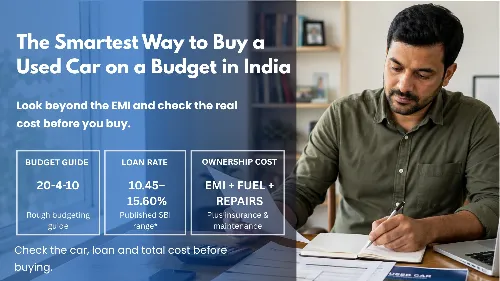
Buying a used car in India? Learn how to set your budget, compare loans, check the car, understand GST and negotiate with confidence.
You found a used car that looks affordable. The price feels much lower than a new car, and the monthly EMI looks okay too. But before you pay any booking amount, ask yourself a more important question: what will this car actually cost you once you add in the loan, insurance, fuel, repairs, and everything else?
A smart used-car purchase starts before you even pick the car. Set your total budget first, check the real cost of the loan, inspect the car properly, and only then negotiate the price. This simple order can save you from buying a car that looks cheap but turns out expensive.
Step 1: Decide Your Total Car Budget First
Don't start with "How much EMI can I afford?" Start with "How much can I comfortably spend on this car every month, in total?"
Your real car cost is more than just the EMI. You also need to think about fuel, insurance, servicing, repairs, and parking. A lower EMI can sometimes just mean a longer loan — which means you end up paying more interest overall.
A simple rule some people follow is the 20-4-10 rule: about 20% as down payment, a loan of around 4 years, and total monthly car costs staying near 10% of your gross monthly income. This is only a rough guide, not a bank rule or a promise that the car is affordable for you.
For a used car, also keep some money aside for after the purchase. Even a well-kept car may need new tyres, a new battery, or servicing soon after you buy it.
Step 2: Understand Why Used Cars Can Cost Less
The biggest reason people go for a used car is simple — the price is usually lower than a similar new car.
India's used-car market has also become a large part of the country's automobile market. Organised used-car businesses are becoming more common, giving buyers more options than they had in the past.
That doesn't mean every used car is automatically a good deal. It only means that buying used has become a common option for Indian car buyers.
The real point for you is this: a lower price does not automatically mean a lower total cost. The car's condition, the loan rate, insurance, and repairs can all change the final number.
Step 3: Compare the Loan, Not Just the EMI
Used-car loan rates can vary between lenders and borrowers. The rate you finally receive can depend on your credit history, income, the car's age, the loan amount, loan period, and the lender's own rules.
| Lender / Product | Published Interest Rate |
|---|---|
| SBI Certified Pre-owned Car Loan Scheme | 10.45% – 15.60% |
SBI's official Auto Loans page currently lists 10.45% to 15.60% for its Certified Pre-owned Car Loan Scheme (CIC-based rates applicable). You can check the official SBI Auto Loan interest-rate page for the latest information.
This is a published lender range, not a rate every buyer will receive. Your actual rate can be different depending on your profile and the lender's current terms.
This is exactly why looking only at the EMI can trick you. Always compare the interest rate, the loan tenure, processing charges, and total repayment before you choose a loan.
Important: Loan rates can change. The rate you're offered may be different from what's published. Always confirm the lender's current offer before you sign anything.
Want to understand how a smaller EMI can sometimes cost you more in the long run? Read our guide on why a low EMI can still cost you more.
Step 4: Check the Car Before You Pay
This is one of the most important steps when buying used.
A test drive tells you how the car feels, but it can't tell you everything about its condition. Before you pay any booking amount, get the car checked by a qualified mechanic.
Ask the mechanic to look at the engine, gearbox, brakes, suspension, tyres, battery, and any signs the car was in an accident. Also ask the seller for service records and check if the car's history is properly documented.
Don't ignore small problems just because the car looks good on the outside. A car that needs several repairs right after you buy it can quickly wipe out the money you thought you saved.
Our guide on common used-car buying mistakes covers more checks you shouldn't skip.
Step 5: Understand GST on a Used Car
How GST applies depends on the seller and the type of transaction.
The 55th GST Council, in its December 2024 recommendations, increased the GST rate from 12% to 18% on the specified sales of old and used vehicles, including applicable electric vehicles. The official release also states that GST is applied only to the supplier's margin — the difference between the purchase price and selling price, with the applicable depreciation adjustment where relevant — and not to the full value of the vehicle.
The same government release states that this treatment does not apply in the case of an unregistered person.
In simple words, you should not automatically take the full selling price of every used car and add 18% GST. The seller and the structure of the transaction matter.
If you're buying from a dealer, ask for a proper invoice and understand exactly what you're being charged for.
You can check the official 55th GST Council press release for the government's explanation of the used-vehicle GST change.
Step 6: Complete the Ownership Transfer Properly
Paying the seller doesn't mean the purchase is done.
Make sure the car's ownership transfer and registration are completed correctly. Check the Registration Certificate, insurance, pollution certificate, and other required documents. If there was an existing loan on the car, confirm that the lender's claim has been properly cleared before you complete the deal.
For the ownership-transfer process, use the official Parivahan information and the required government forms. Parivahan's official website provides vehicle-related services and information. You can also check with the relevant Regional Transport Office for the documents and process applicable to your vehicle.
Don't just trust the seller's word for this. Check the documents yourself and keep copies of everything important.
Step 7: Negotiate Using the Car's Actual Condition
Once your inspection is done, you have real information to negotiate with.
Compare the asking price with similar cars in your area. Then factor in the car's age, kilometres driven, service history, tyre condition, and any accident history or repairs it may need.
If the inspection shows work that needs to be done, include that cost in what you're willing to pay. Don't lower your offer just because another seller is asking less elsewhere — use the actual, specific differences between the cars.
A simple way to approach this:
- Check prices of a few similar cars.
- Check the car's service and ownership history.
- Get an independent inspection done.
- Estimate any immediate repair or maintenance cost.
- Compare the final price after adding in those costs.
Don't Forget the Cost After You Buy
The purchase price is only the beginning. Your monthly cost also includes EMI, fuel, insurance, servicing, tyres, repairs, and parking.
For example, two cars might cost almost the same to buy, but one could use more fuel or need more maintenance. Over a few years, that difference adds up to something meaningful.
This is why it's smarter to compare the total cost of owning the car, not just the sticker price.
Check the full cost: Use our Car Ownership Cost Calculator to estimate your monthly cost of owning a car, including the major running expenses — not just the EMI.
Should You Buy From a Dealer or a Private Seller?
| Dealer | Private Seller |
|---|---|
| Usually more support with paperwork and financing | Often more room for direct negotiation |
| May offer inspection or warranty options | You'll likely need to arrange the inspection yourself |
| Need to check the dealer invoice and tax treatment | Need to check ownership and vehicle documents carefully |
There's no single right answer here. The car's condition, price, paperwork, and how trustworthy the seller is matter more than simply picking "dealer" or "private seller."
Frequently Asked Questions
Is buying a used car cheaper than buying a new car?
The purchase price is usually lower, but that doesn't guarantee a lower total cost. Loan interest, fuel, insurance, repairs, and maintenance all need to be added in before you compare the two.
What interest rate can I expect on a used-car loan?
Published rates vary by lender and borrower. For example, SBI's official page currently lists 10.45% to 15.60% for its Certified Pre-owned Car Loan Scheme. Your actual rate may be different based on your profile and the lender's terms.
Should I get a used car inspected?
Yes. A professional inspection can catch mechanical problems, past accident repairs, and maintenance needs that a normal test drive won't show you.
Does GST apply to a used car?
It depends on the seller and transaction. For the applicable old and used vehicle sales covered by the GST Council's December 2024 decision, GST is charged on the supplier's margin rather than the full vehicle value. The government release also states that the treatment does not apply to unregistered persons.
What should I check before buying a used car?
Check the car's condition, service history, ownership documents, insurance, registration, any pending loan on it, accident history, and the likely cost of repairs before you make the final payment.
Check Your Own Numbers Before Buying
The smartest used-car purchase isn't necessarily the cheapest car you can find. It's the car that fits your budget without creating a monthly burden you didn't plan for.
Start with your income using the Car Affordability Calculator. Then check what you can borrow with the Loan Eligibility Checker. Finally, use the Car Ownership Cost Calculator to look past the EMI and see the full picture.
Once those numbers make sense, inspect the actual car, verify the documents, and negotiate based on what you found. That's a much safer way to buy a used car than choosing one just because the EMI looks affordable.